Trump’s Tariff Policies Are Becoming A 20/80 Political Issue
First, let’s define what we mean by a 20/80 issue. A 20/80 issue is a political stance or policy position that is supported by only about 20% of the public, while 80% oppose it—yet politicians or political institutions still back it anyway.
Key Characteristics of a 20/80 Issue:
- Lopsided Public Opinion – Vast majority of voters disapprove of the policy
- Political Endurance – Despite unpopularity, it continues due to power structures, lobbying, or political strategy
- Low Voter Salience – Often under-the-radar issues that don’t provoke mass protests or single-issue voting
- Elite or Special Interest Support – Backed by donors, corporations, or narrow ideological groups
Why the 20% Wins Anyway:
- The 20% might be powerful: wealthy donors, corporate lobbies, or political bases
- The 80% might not care enough to vote on that issue alone
- Policymakers may assume voters forget or won’t notice
- The issue may be obscured by technical language or buried in legislation.
Examples of 20/80 Issues Include:
- Congressional stock trading opposed by ~75–80% but survives because Lawmakers profit on these trades and there is weak enforcement of existing rules.
- Fossil fuel subsidies opposed by ~70% but survives because of industry lobbying and the importance to some representatives’ local economies.
- Corporate tax loopholes opposed by ~60–80% but survives because of the influential donor class and the complexities of the tax policy.
- Weak privacy/data protection laws opposed by ~70% but survives because of big tech influence and low voter salience.
So, Are Trump’s Tariff Policies Becoming a 20/80 Political Issue?
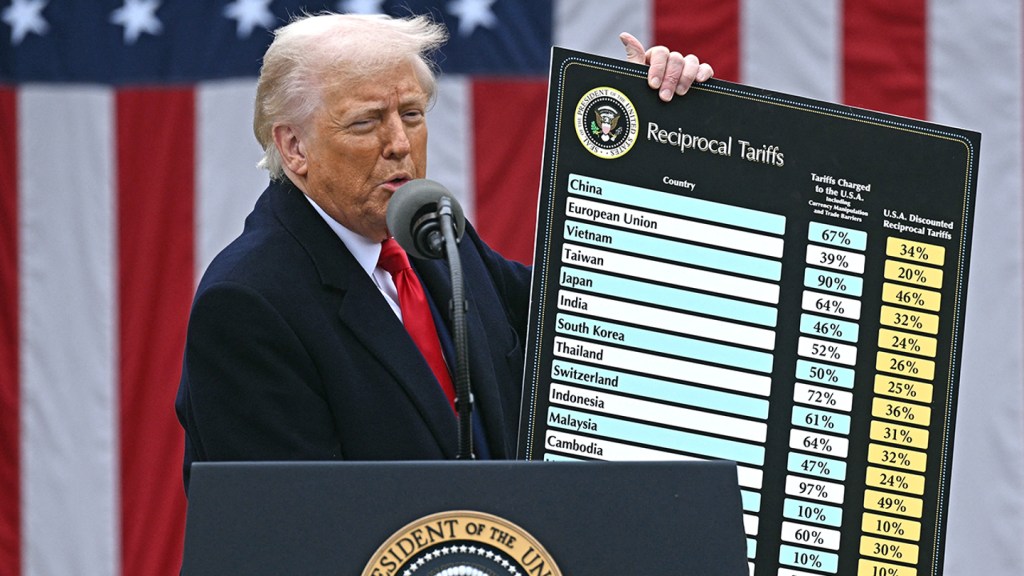
Yes — Trump’s tariff policies are showing signs of becoming a 20/80 issue, or at least trending in that direction. While not quite at full 20/80 levels yet, recent polling reveals a clear public tilt against the tariffs, even though political support from certain factions remains strong. Let’s break it down:
Poll Numbers Suggesting a Lopsided Shift
- Pew Research (April 2025)
- 59% disapprove, 39% approve of the tariffs overall
- Among Democrats: 90% disapprove
- Among Republicans: 70% approve
- 59% disapprove, 39% approve of the tariffs overall
These numbers indicate polarization, but also that a large national majority is skeptical.
- Reuters/Ipsos (April 2025)
- 73% expect higher prices as a result of tariffs
- 57% oppose them outright
- 25% of Republicans oppose the tariffs — a warning sign of softening partisan support
- 73% expect higher prices as a result of tariffs
- Trump’s Economic Approval
- Dropped to 37% from 42% at the start of his term — tariff backlash is a major factor
- Dropped to 37% from 42% at the start of his term — tariff backlash is a major factor
While these numbers are not quite at the level of something like congressional stock trading (which is almost universally opposed), tariffs are:
- Unpopular nationally
- Economically risky
- Politically sustained by partisan loyalty, identity, and inertia
If inflation ticks back up and more voters feel the cost directly, Trump’s tariffs could become a full-blown 20/80 political liability.
In summary, while President Trump’s tariff policies maintain support within his core base, they face growing opposition from the broader public due to concerns over rising prices and economic instability. So why are Republicans continuing to support the policies? Will they continue to support the policies if they become a true 20/80 issue? If so, why would they support a 20/80 issue?
 The Centerline Report
Leave a comment